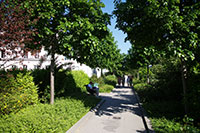
Good friends who had rented an apartment in Paris for a week were not able to travel at the last minute. They generously offered us the accommodations as they could not obtain a refund. How is this view from the balcony during a spring breakfast?

We explored the Jardin des Plantes for the first time.


Bee habitat


One spot we have been meaning to see is the Basilica and Crypt at St. Denis.
IT WAS SOMEWHERE AROUND the year 270 AD when Denis, a Christian missionary and Bishop of Paris, was martyred on the hill we now call Montmartre. Denis was beheaded during the period of Christian persecution under the Roman Emperors Decimus and Valerian. It is said that after his head was chopped off, Denis picked it up and walked six miles or so preaching a sermon as he went. The place where he eventually fell and died was marked by a small shrine which eventually became the Basilique Saint-Denis and the burial place of the Kings of France.
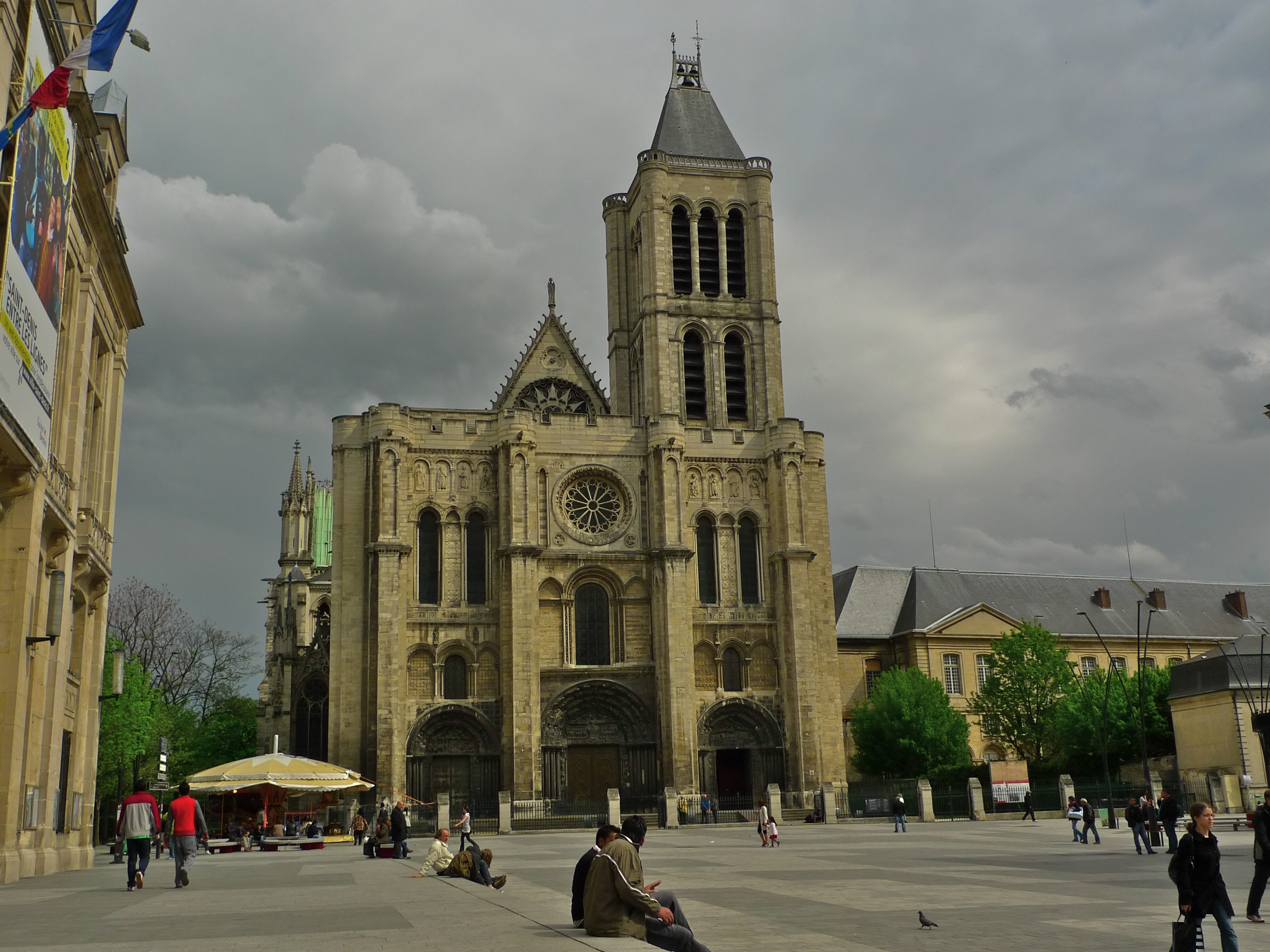
The Basilique Saint-Denis is a medieval abbey church in Saint-Denis, a northern suburb of Paris.
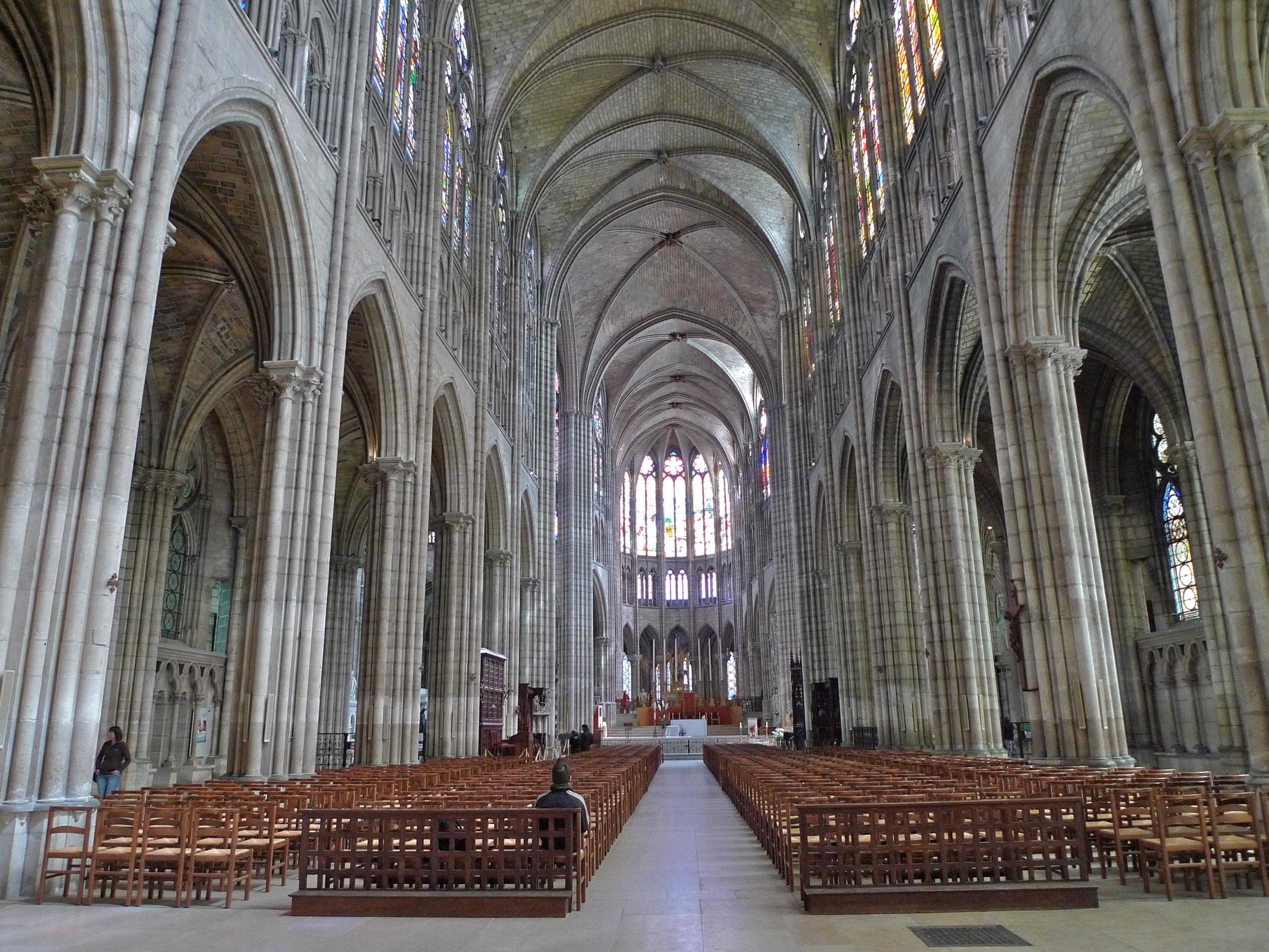
In Roman times the site was a Gallo-Roman cemetery but around 475 Saint-Genevieve purchased some of the land and built a church. This became a place of pilgrimage and in the 7th century, Dagobert I had this church replaced with something grander. By the 12th century it had grown to become one of the most powerful Benedictine abbeys in France. The abbot of Saint-Denis, Suger, rebuilt portions of the abbey church using innovative structural and decorative features turning it into a masterpiece of what came to be known as Gothic art. The basilica provided an architectural model for the cathedrals and abbeys of northern France, England and other countries.
Over the years, the Abbey was plunged into decline by wars and the Revolution. During the Revolution the tombs were opened and the bodies were removed and dumped in two large pits nearby and dissolved with lime. In 1806, Napoleon Bonaparte reopened the church and the royal remains were left in their mass graves. Thankfully, most of the tombs survived the Revolution and today they lie resplendently in the much-visited “Royal Necropolis of France”.

Clovis I (465 – 511) and Childebert I (496 – 558)

Henry II and Catherine de Médicis
The fate of King Louis XVI and his wife Marie Antoinette of Austria is well known. Both were guillotined in the Place de la Concorde during the Revolution. They were though not initially buried in the Basilique Saint-Denis, but rather in the churchyard of the Madeleine, where they were covered with quicklime. Louis XVIII, the last king of France to be buried in the Basilique Saint-Denis, ordered that the remains of Louis XVI and Marie-Antoinette be transferred from the Madeleine cemetery and today they lie side by side in the crypt of the Basilique Saint-Denis.

The two centre tombs: On the left is Marie-Antoinette and on the right is Louis XVI
In the cache below is the heart of the son of Louis XVI, also believed killed during the revolution.

Spent an evening at the Duc des Lombards jazz club. Ron felt like he was in 1920's Paris.

A new quest - who has the best profiteroles?

Spent an afternoon with Dan O'Donnell's daughter, Kristine, studying at Sorbonne.

We finally got a table at fabeled Angéline's pastry and ice cream shop on rue de Rivoli. Every time before, the lines were just too long.

A delectable lemon pastry filled with loads of creme.